
Marquiepta Odom Williams Is On A Mission to Help Survivors Of Domestic Violence Find Hope Again
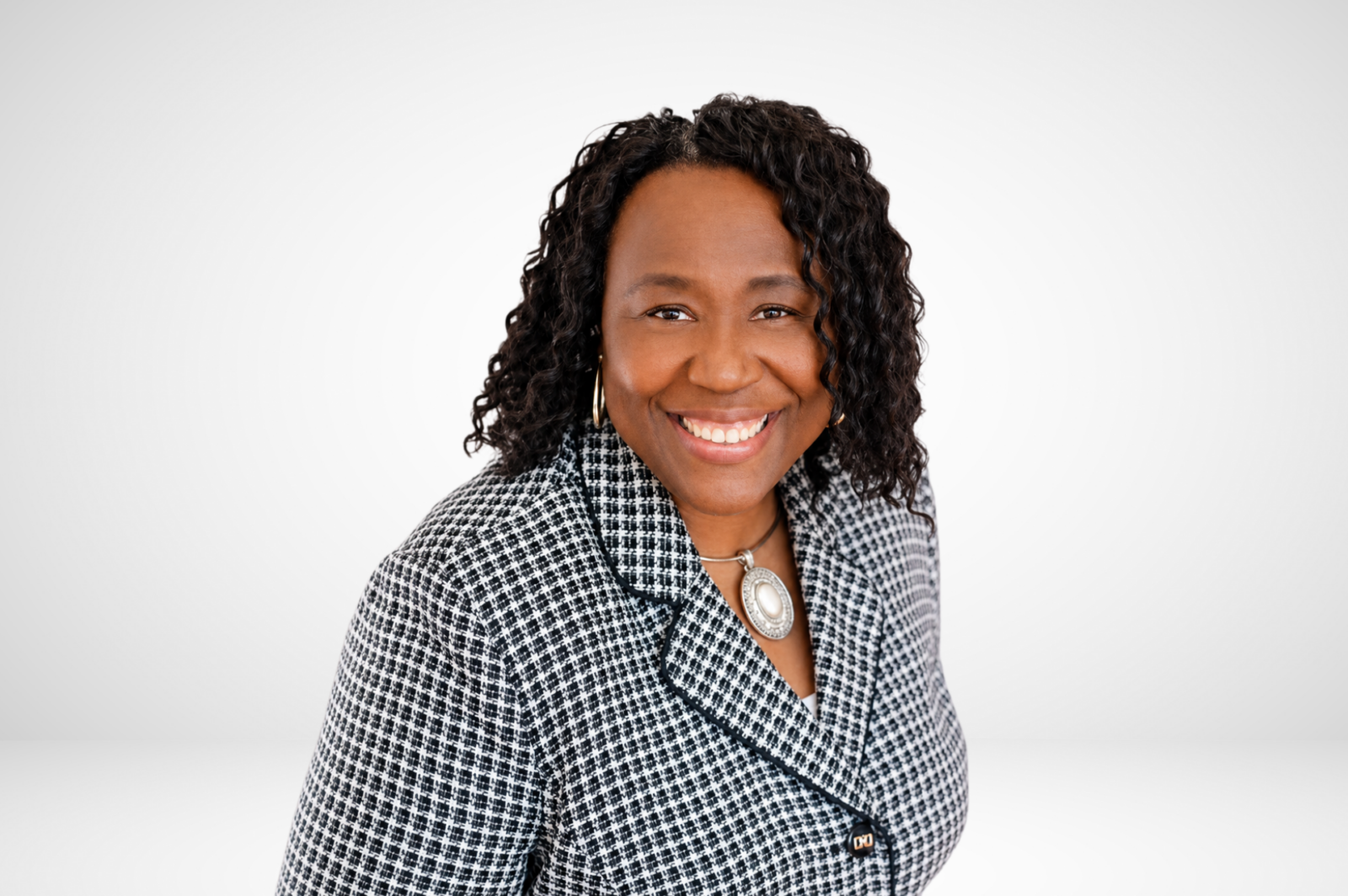
Both Marquiepta Odom Williams and I are on the phone line on this beautiful spring Wednesday morning. She is calling from Memphis, so while it is 11 a.m. in North Carolina, it is 10 a.m. hers. We both begin our conversation and without notice, the call drops. We both call back in and immediately Williams says, “The devil is a liar.”
Williams describes herself as both an introvert and an extrovert. At work, she is often in the community, engaged, active, and serving in multiple capacities. At home, she becomes more quiet, using that time to rest and think.
As Executive Director of the YWCA Greater Memphis, Williams works closely with survivors of domestic violence and women rebuilding their lives after abuse. But long before leadership, advocacy, and public service, she was working on her own experience of violence and healing. When asked what empowered her to help young women and girls, she says, “What actually empowered me to speak and help young women and girls is my own testimony, or the pain that I went through of being a survivor of domestic violence.”
Her experience began long before marriage. “It started off as family violence. My mom and father had issues, and I ended up getting hit. Then I ended up marrying someone at that time who was just like my father,” she recalls. My father changed and we had a wonderful relationship until he passed away last year.
Looking back, she sees how purpose emerged from pain. “My purpose was birthed through the pain, through the agony, through all the stress,” she says. “Here I am today helping people from the very thing that I went through.”
The relationship did not begin with physical abuse, but warning signs were there early on. “When he would get upset, he would yell, scream, and then one time I remember him throwing the phone,” she recalls. In hindsight, she recognizes that moment as one she should have acted on. “That was really my time to say, ‘You know what? I need to get out of this,’” she says, “but I stayed in that marriage anyway.”
For nearly five years, Williams remained in a marriage that became increasingly unhealthy and violent. One night, she says, she reached a breaking point. “I decided that I was going to kill him.”
She does not linger on the moment, but on what it reveals about how far emotional and psychological pain can go when it is prolonged and unaddressed.
During that season, she says her grandmother remained a steady source of prayer and grounding. “I had a praying grandmother who would tell me, ‘Something is going on. I don’t know what it is, but I am praying for you, Quitepta, and I know that God will deliver you.’”
On the night she made her decision, Williams describes a moment of clarity she attributes to divine intervention. “It’s like the Holy Spirit, a wind blew through the room, and it’s like I came back to my senses,” she says. “Anything that would drive me to want to take a person’s life is so unhealthy, and I don’t want a part of this.”
After the marriage ended, she shifted into a season of rebuilding. “He ended up leaving. I ended up filing for divorce, and then I started working on me to figure out how did I attract someone like this.”
That process included returning to her faith and seeking counseling. “Getting back to my roots,” she explains. “I had stopped going to church and doing those things just to please him, so rebuilding that relationship with my Lord and Savior Jesus Christ.”
She also participated in both church based and therapeutic counseling, which helped her recognize deeper patterns. “I discovered that the things that I saw in my home, I had internalized and didn’t realize that the pattern that I saw ended up being the same steps and the same things that I decided I would end up with.”
Forgiveness, she adds, was one of the hardest parts of healing. “The biggest thing was getting over the condemnation to forgive myself.” For years, she carried silence and shame, admitting, “I suffered in silence. I felt shame, I felt guilty, and I also felt the condemnation of how I got in this situation?”
Much of what she experienced remained hidden. “If I was bruised or something, I just didn’t go to family dinners. I made an excuse. I got to work, or things of that nature, to cover up for him,” she says. Some of the physical reminders remain. “There’s a little split in my right pupil that if you get close enough to me, you can actually see it,” she shares. “And then he cracked my nose one time.”
Even in healing, her sense of identity began to shift through faith. “Because I didn’t love myself, when I looked in the mirror, I didn’t see my worth.” One scripture became central to her restoration. “One of the first things that God would remind me over and over was the scripture that talks about being the apple of His eye,” she says.
That truth slowly reshaped how she saw herself. “I had to really focus on, Lord, I am the apple of Your eye. That means I am worthy. That means I am blessed.”
Over time, she began to believe it.
Williams now reflects on her journey as one of breaking generational patterns. “I broke a cycle of domestic violence in my family from my grandmother to my mother, and God used me to say no more and to end that cycle.”
That understanding now shapes her work at the YWCA Greater Memphis, where she serves in leadership within the domestic violence shelter, working closely with women and families rebuilding their lives after abuse. She describes the space as a nonjudgmental environment where survivors are supported as they begin again.
“When they leave our domestic violence shelter, they leave with hope,” she says. “They leave with a newfound motivation and a love for themselves that they did not have before they came.”
Williams explains that support begins immediately upon entry. Case managers work alongside survivors to help them determine next steps and begin rebuilding stability, especially for those who may have been out of the workforce or focused primarily on their partner and home life. The goal, she says, is to help them begin shaping a new direction for their lives.
The shelter also provides wraparound support, including transportation when available, three meals a day with snacks, and clothing assistance for women and children who often arrive with very little. When needs extend beyond what is immediately available, the organization partners with community resources to ensure families are supported.
Beyond immediate care, Williams highlights workforce development through Progressive Pathways, a program that connects survivors with job skills training and short-term certification opportunities in partnership with local colleges. Through this work, survivors gain tools to reenter the workforce and build financial independence.
She points to outcomes she has witnessed, including participants completing training in the clinical medical assistant field and successfully passing national certification exams, steps that allow them to transition into stable employment and new careers.
Through it all, Williams emphasizes that healing is both spiritual and practical. “I encourage them to continue to pray,” she says, “but we also have to understand that once we pray, we have to stand up and put action behind our prayer.”
For women feeling trapped, she encourages practical steps like seeking information, developing safety plans, and reaching out to domestic violence hotlines or organizations that can guide next steps safely.
Throughout the conversation, Williams returns to one steady truth: healing is possible, cycles can be broken, and purpose can rise from pain.
Before the interview ends, she offers a final reminder: “You are blessed. You are highly favored. You are the apple of God’s eye, and He only wants the best for you.”
Coming from someone who has walked through family violence, domestic abuse, silence, healing, and restoration, her words stand not only as encouragement but as testimony.
Sign up for the Today’s Purpose Woman newsletter for stories, reflections, and notes from the editor.
More stories are waiting for you in the latest issue of Today’s Purpose Woman.